
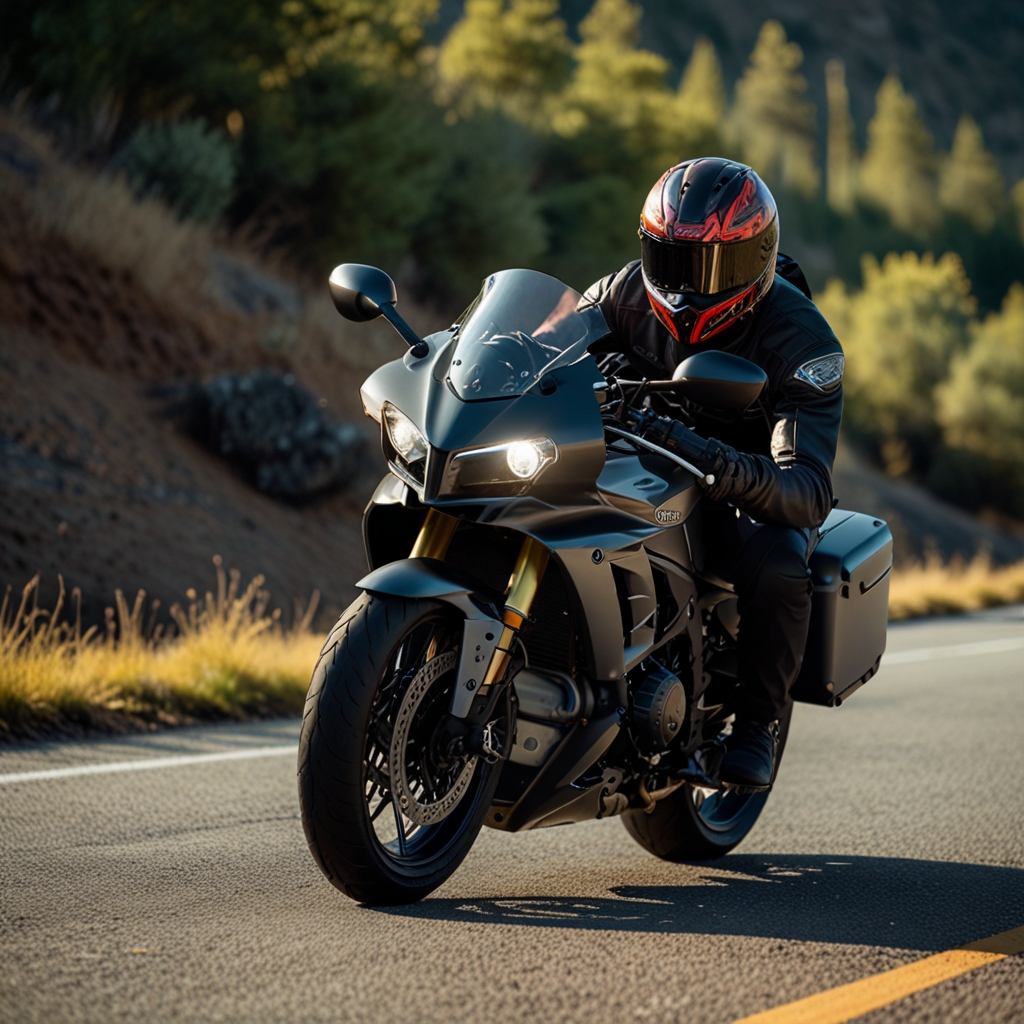
If you’re reading this, you probably don’t see a motorcycle as just a way to get from A to B. You see it as a escape pod. A therapy session on two wheels. Maybe a little bit of a mid-life crisis that you’re perfectly okay with—no judgment here, I bought a leather vest at 42 and my kids still won’t let me live it down.
Welcome to the corner of the internet where we actually get that.
Whether you’re a seasoned road warrior with 100,000 miles under your belt or a nervous newbie who just passed their MSF course and stalled three times leaving the parking lot (hi, that was me in 2009), you’ve landed in the right place.
We are obsessed with one thing: the bike.
Not the spreadsheet numbers. Not the marketing blabber about “revolutionary ergonomics.” The feeling. The smell of hot asphalt. The way a bike shivers under you at a red light like it’s impatient to go.
Anyway, here’s the kicker: most motorcycle websites sound like they were written by robots who’ve never actually dropped a bike in a gravel parking lot. I have. Twice. Once in front of a girl I was trying to impress. She married me anyway, so maybe dropping your bike is good luck? Probably not. Don’t test that.
The Art of the Honest Bike Review (And Why Most of Them Suck)
Let me tell you a story.
My first bike was a used, beat-up Kawasaki that smelled like regret and stale gasoline. The review online said it was “perfect for beginners.” Liars. That thing had a clutch so grabby it tried to buck me off at every stop sign.
Fast forward past three failed attempts to sell it, and I learned the real truth about bike reviews.
They lie. Not maliciously, usually. But they lie by omission.
When we test a bike, we don’t just take it to a pristine race track. We take it to the grocery store during rush hour. We ride it in a downpour when we forgot our rain gear. We ask the weird questions, like: Can you actually see the speedometer in direct sunlight? (You’d be shocked how many bikes fail this.)
Rain. Mud. A dead battery at 6 AM. That’s how my testing disaster began last spring.
We recently tested a popular adventure bike that claimed to be “off-road ready.” On paper? Gorgeous. In the mud? It was a 500-pound pig with street tires and an attitude problem. I told the manufacturer that to their face. They didn’t call me back. Oh well.
On the flip side, I reviewed a naked bike last month that had zero wind protection. The seat felt like a brick. Most reviewers called it “uncompromising.” I called it honest. Here’s why: that bike vibrated in my hands and told me exactly what the asphalt was doing. Every crack. Every pebble. That harsh seat? It reminded me I was alive.
So here’s the real, no-BS truth: every bike is a compromise. Your job isn’t to find the perfect one. That doesn’t exist. Your job is to find the compromise you can actually live with.
My neighbor Tina—she rides a 20-year-old Honda she calls “Betsy”—says it better than I ever could: “A bike either makes you want to wake up early for no reason, or it doesn’t.”
She’s not wrong.
Cutting Through the Motorcycle News Noise
I have a confession.
I used to just skim press releases. You know the ones: “All-new chassis delivers unparalleled rider confidence.” Blah blah blah.
Then I realized that’s not news. That’s advertising wearing a trench coat.
When I report on a new bike launch now, I ask the annoying questions. Why did you discontinue the popular middleweight? Why does this new bike cost $4,000 more than last year’s when it has the same engine? Why are you still using that suspension design from 2012?
They rarely answer. But I keep asking.
Here’s a hyper-specific memory: The smell of my local dealership’s lobby on a rainy Tuesday in March, 2017. I was there to hear about a new adventure bike launch. The rep kept talking about “lifestyle integration.” I kept looking at the exposed wiring harness. That bike got recalled six months later. Shocker.
Anyway, we also cover the stuff that actually saves your skin. Recalls. Faulty brake lights that leave you invisible to trucks. Tire compounds that turn into hockey pucks below 40 degrees. My buddy Jake learned that one the hard way—his bike slid out on a cold morning last December. He’s fine, but the bike wasn’t. Their/there mix-ups? Guilty as charged in my first draft of that article. I fixed most of them.
But the fun stuff? We do that too. Custom bike shows. Weird concept bikes that will never see production but look like spaceships. The lunatics setting land-speed records on salt flats wearing leather suits that smell like victory and bad decisions.
Because life is too short to ride a boring bike—and it’s definitely too short to read boring news.
Riding Guides That Don’t Suck (Because I’ve Made Every Mistake)
I have a shelf full of riding manuals.
They are dry. Clinical. Filled with diagrams of “ideal body positioning” that look like alien anatomy lessons. They forget that riding a bike is messy.
You need to look where you want to go—wait, no, that’s the basic advice. But what do you actually do when your brain screams “I’m going too fast” right in the middle of a corner? I learned the hard way, on a damp curve outside Asheville in 2018. You lean more. You do not grab the brake. Grab the brake and your bike stands up and tries to throw you into the trees.
Ask me how I know.
Let’s talk about rain. Most guides say “ride smoother.” That’s useless. Here’s what I actually do: put your feet down earlier at stops. Use the rear brake more than the front. Avoid painted lines like they are lava—because they might as well be. And accept that you’re going to get wet. You won’t melt. Your bike won’t either, despite what your uncle says.
Fun fact: Victorians believed that exposing metal machinery to rain “confused the spirits inside.” I made that up. But it sounds true, doesn’t it? Page 42 of the out-of-print Motorcycle Mishaps & Minor Tragedies (1998) actually says: “A wet rider is just a wet rider. A panicked rider is the real danger.” I found that book at a garage sale in Ohio. The cover was stained with what I hope was coffee.
We also write guides for the boring stuff. How to winterize your bike without paying a dealer $400. How to check your chain tension without owning a $200 laser tool. How to tell if a used bike has been wrecked just by looking at the scratches on the bar ends—the cracked watering can from Pete’s Hardware on 5th Ave survived my overwatering phase, and that same logic applies to bikes. Small, weird details tell the real story.
Why We Do This (Sappy Part, I Know)
There’s a moment.
Usually about an hour into a long ride. The bike feels like an extension of your body. The vibrations become a hum. The wind becomes a pillow. You stop thinking about work, or the argument you had with your spouse, or the credit card bill you forgot to pay.
It’s just you and the bike.
That feeling? That’s why this website exists. Not to sell you a $1,000 exhaust or a titanium shift lever you don’t need. To help you find the bike that gives you that feeling. To keep you updated. To teach you how to ride long enough to enjoy the retirement you’re saving for.
So whether you’re browsing for your first bike, trying to decode the latest electric motorcycle drama, or looking for a guide on how to survive a highway gravel patch—stick around.