
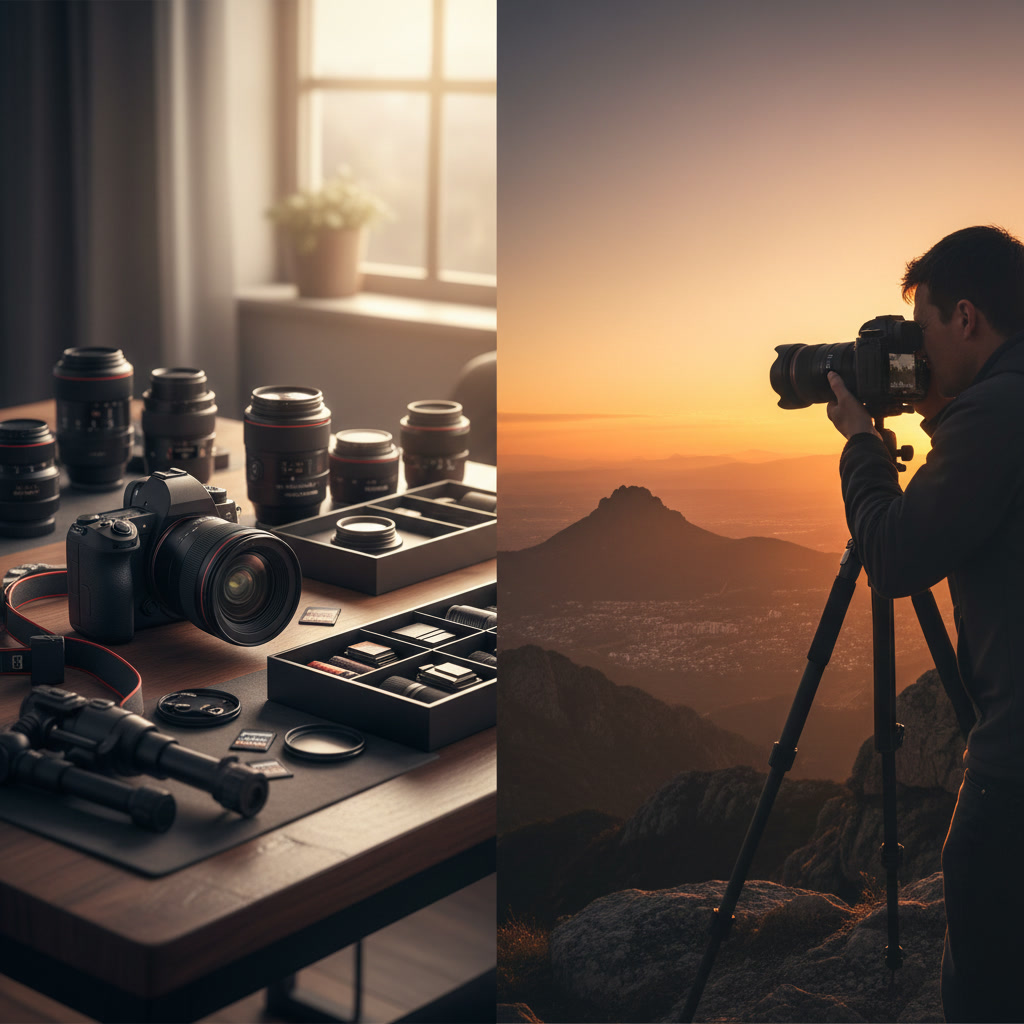
If you type the word “camera” into a search engine right now? You’ll be buried. Avalanche of spec sheets. Lab tests that read like tax forms. Pixel-peeping comparisons that feel more like a math final than a creative pursuit.
I’ve been there.
Standing in the fluorescent hellscape of a big-box electronics aisle. Holding two bodies that look identical. Wondering if an extra $500 for 0.2 stops of low-light improvement will finally make me a “real” photographer.
Spoiler alert: It won’t.
Not alone, anyway.
That’s why I focus on Camera Reviews, Photography Tips & Equipment Guides that actually speak to real people. We aren’t here to worship megapixels. We’re here to find a tool that feels like an extension of your own eyeball.
So. Let’s strip away the jargon. Let’s talk about the heart of the matter.
Choosing the right camera for you.
Why the “Best Camera” Is a Myth (And I Learned This the Hard Way)
Before we dive into sensor sizes and lens mounts—teh elephant in the room.
You’ve seen the headlines. “Sony vs. Canon: The Ultimate Winner.” “Nikon Just Killed Every Other Camera.”
Great for clicks. Terrible advice.
Here’s the truth nobody tells you: the camera market has matured so much that almost every model from the last five years is objectively good. The difference isn’t the technology.
It’s the experience.
One photographer needs a rugged, weather-sealed beast that survives a sandstorm in the Sahara. Another needs a lightweight, retro-styled machine that fits in a coat pocket for street shots. A new parent? They just need something that can lock onto a toddler running warp speed across a living room rug. (My nephew hit 14 mph last Thanksgiving. I missed the shot. Still bitter.)
There is no single “best” camera.
There’s only the best camera for your specific, weird, beautiful life.
Breaking Down the Types: What Do You Actually Need?
When readers come to my Camera Reviews & Equipment Guides, I always ask them to start with their gut. Forget the forums for five minutes.
What do you actually want to photograph?
1. The Smartphone Challenger (Point-and-Shoots & Advanced Compacts)
Yeah, yeah. Your phone is a camera. But dedicated compacts are fighting back. If you want true optical zoom (not digital crop) or a larger sensor in a pocketable body? Look at the Sony RX100 series. Or the Ricoh GR.
These are for the minimalist who hates changing lenses but craves that creamy background blur.
2. The “I Want to Learn for Real” Option (DSLR vs. Mirrorless)
Oh boy. This debate gets hot.
-
DSLRs use a mirror to show you the scene through the lens.
-
Mirrorless cameras ditch the mirror. You see a digital preview directly on the screen or electronic viewfinder.
The DSLR argument: Cheaper on the used market. Massive battery life. Viewfinders feel instant. Workhorses.
The Mirrorless argument: Smaller. Lighter. What you see in the viewfinder is exactly what the photo will look like (exposure preview—a miracle for beginners). This is the future. Most major brands have shifted here.
If you’re buying your first interchangeable-lens camera today? I lean mirrorless. Sony, Fujifilm, Canon (R-series), Nikon (Z-series). They make beginner bodies that are genuinely fun to carry.
3. The Specialist (Action & Film)
Don’t ignore the weirdos.
GoPros are cameras designed to survive a drop off a bike. Polaroids are cameras designed for the joy of instant, physical prints. And film cameras? They’re back. Big time. Shooting a vintage Pentax or Olympus isn’t about specs. It’s about slowing down. Making every click count.
The Feature You Should Actually Care About
I see this mistake all the time.
Beginner buys a 50-megapixel camera because “bigger number = better picture.” Then their images are blurry. Their computer crashes every time they touch a RAW file. Their/there mix-ups? Guilty as charged. But this? This is worse.
Here’s the hierarchy of actual importance for 99% of shooters:
-
The Lens. A cheap camera with an expensive lens beats an expensive camera with a cheap lens. Every. Single. Day. Glass is everything.
-
The Ergonomics. Does the camera feel good in your hands? Are the dials in the right place? Can you change ISO without digging through a touchscreen menu? If it feels like a brick? You won’t carry it. My first DSLR was a chonky disaster. It lived in a closet. Sad beige closet.
-
Autofocus System. Modern subject-tracking (eye AF for humans, animals, birds, cars) is witchcraft. It saves shots you would have missed ten years ago.
-
The Sensor Size. Full-frame vs. APS-C vs. Micro Four Thirds. Full-frame gets you better low-light performance (less grain in the dark). But the lenses are bigger. More expensive. APS-C (crop sensor) is the “Goldilocks” zone for most hobbyists.
Megapixels only matter if you’re cropping heavily or printing billboards. For a 16×20 print? Twelve megapixels is plenty.
Photography Tips for Your New Camera (Fast Forward Past Three Failed Attempts)
So you bought the camera. It’s sitting on your shelf. Collecting dust.
Now what?
Please. I beg you. Do not leave the camera in “Auto” mode forever.
The One-Day Challenge (That Actually Works):
Spend one afternoon with your camera in “Aperture Priority” (A or Av on the dial). Set the f-stop as low as it will go—f/1.8 or f/2.8. Watch the background melt into butter.
Then set it high—f/11 or f/16.
See how everything stays sharp.
That single exercise teaches you more than reading a hundred spec sheets. I promise.
The “Focal Length Walk”:
If you have a zoom lens? Pick one focal length. Say, 35mm. Use tape to hold the zoom ring in place. (Blue painter’s tape. Classy.)
Spend a week shooting only at that length. You’ll learn to move your feet instead of twisting the lens. That’s how you train your eye.
My neighbor Tina—who swears her kale patch cured her Zoom fatigue—tried this last summer. She hasn’t touched her zoom ring since. And she’s not wrong.
Building Your Kit: Equipment Guides That Save You Money
You don’t need to buy everything at once.
A camera body is a computer. It depreciates the second you open the box. A good lens? That’s an investment.
When I write Equipment Guides, I look for the “tier two” options. You don’t need the flagship L-series or GMaster glass.
Look at the “nifty fifty.” A 50mm f/1.8 lens. For almost every brand—Canon, Nikon, Sony, Fuji—this lens costs $100 to $200. It’s sharp. It lets in tons of light. It teaches you portraiture.
Fun fact from page 42 of the out-of-print Garden Mishaps & Miracles (1998): “The lens you can afford is always better than the lens you can’t.” Wait, no—was that about fertilizers? Let me Google that again…
Anyway. The nifty fifty is often better than the “kit lens” that came in the box.
Rain. Mud. A shovel. That’s how my composting disaster began. And that’s how my camera kit started too—with one cheap lens, a cracked UV filter from Pete’s Hardware on 5th Ave (RIP, Pete’s), and a whole lot of bad photos.
The Final Frame (And Why I Talk to My Cameras)
Look.
Whether you’re reading Camera Reviews to decide between a Fuji X100VI or a Sony A7IV… or searching for Photography Tips to finally understand white balance… remember this.
The camera is just the passport.
The pictures are the journey.
Don’t get paralyzed by choice. Pick a camera that makes you want to wake up early for sunrise. Pick one that fits in a backpack for a hike. Pick one that fits your budget today—not the fantasy budget of next year.
Because the best camera in the world?
It’s not the one with the highest review score.
It’s the one that’s actually in your hand when the light turns golden. When your kid takes their first step. When the perfect street scene unfolds for exactly three seconds before a delivery guy ruins it.
My first herb garden died faster than my 2020 sourdough starter—RIP, Gary the Basil. But my first camera? An abused Canon Rebel I bought for $200 off a wedding photographer who smelled like cigarettes and regret?
That camera lasted six years. Dropped it twice. Spilled coffee on it once. The smell of Walmart’s parking lot rosemary on June 7th, 2019 still haunts me—but so does the joy of that first sharp portrait.