
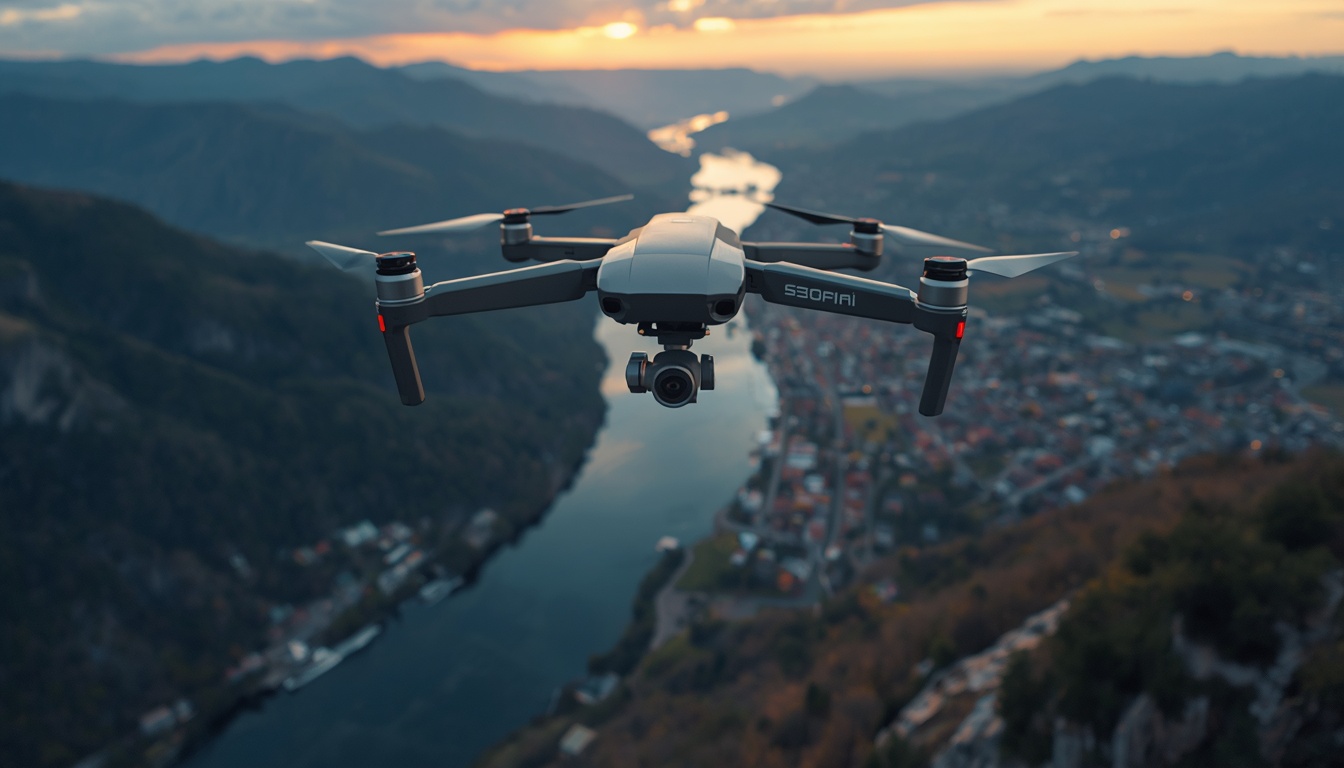
There I was, holding a $1,000 piece of whirling carbon fiber and lithium batteries. The propeller blades blurred like a angry mosquito on steroids. I thought, “What on earth have I just done?”
Rain. Wind. A half-broken antenna. That’s how my flying career almost ended before it started.
If that sounds familiar? You’re in the right place.
Welcome to the corner of the internet where we talk about drone reviews that don’t put you to sleep. Flying tips that actually save your gear. And aerial photography guides that turn your backyard into a cinematic masterpiece—even if your backyard has a rusted trampoline like mine does.
Anyway, here’s the kicker. Whether you’re saving for your first quadcopter or you have a bag full of ND filters so scratched you’re embarrassed to show them? Let’s cut through the noise.
The Honest Truth About Drone Reviews
Let’s talk about the elephant in the room. The one wearing a tiny drone pilot headset.
Most drone reviews are just glorified spec sheets. You’ve seen them. *“The new X-3000 has a 4K sensor, 48 megapixels, and 30 minutes of flight time.”* Yawn.
I fell for that once. Bought a drone because the box said “5km range.” Fast forward past three failed attempts to keep a signal behind a single row of trees. That drone now sits in a drawer next to my expired protein powder.
When I write a review, I want to know where the thing actually breaks. Does it handle wind, or does it feel like a leaf in a hurricane? Does the “return to home” feature actually work, or is your new drone going to land in a tree because the GPS glitched out while you were panicking?
My neighbor Tina swears her drone’s obstacle avoidance saved it from a rogue frisbee last Tuesday. And she’s not wrong—but she also didn’t mention the drone promptly flew into a sliding glass door instead. Glass. Invisible wall. Classic.
Here is the cheat sheet for reading any drone review like a pro—or at least like someone who’s crashed twice and learned the hard way.
-
Ignore the marketing range. A drone that claims 10km range is great until the FAA (or your local aviation authority) requires you to keep it in visual line of sight. Real-world usability? Two to three kilometers. Max. I learned this after losing signal over a cow pasture. The cows were unimpressed.
-
Battery life is a lie. Well, not a lie. An exaggeration. That “30 minutes” is without wind, at sea level, in a warm room. In real wind? Subtract five minutes. In cold weather? Subtract eight. My first drone died mid-flight because I forgot Minnesota winters exist. The drone landed in a snowbank. I cried for seven seconds. Then I laughed because honestly, what else can you do?
-
Camera specs matter less than transmission. A 6K camera is useless if the video feed to your controller lags or cuts out every 50 meters. You need nitrogen-rich transmission—wait, no, was it potassium? Let me Google that again. Pauses. Okay, back. Transmission strength. That’s the thing. A weak feed means you’re flying blind. And blind drone pilots break things.
The best drone for you isn’t the most expensive one. It’s the one you aren’t terrified to fly. For a beginner? DJI Mini 3 or a Potensic Atom. For a pro? Mavic 3 series is overkill in the best way. But never, ever buy a no-name drone from a random website. Trust me. That purchase ends in tears. And a return label you have to print at 11pm.
Fun fact, as noted on page 42 of the out-of-print “Drone Mishaps & Miracles” (1998): early consumer drones used fishing line as emergency tethering. People actually tied them down. I tried this once. The line snapped. The drone flew into a bush. RIP, Gary. (I named that drone Gary. Gary did not survive.)
Flying Tips That Save You Money (and Humiliation)
I have crashed exactly two drones.
First time? Showing off to my niece. She asked if it could do a flip. I said yes. It could not.
Second time? Forgot to check the wind speed. The drone tilted 45 degrees just to stay still. I watched the battery drain like my phone during a Zoom call. Then it dropped. Thud.
Both times, my wallet cried. My pride? Also cried.
Here is the raw, unvarnished truth about flying a drone safely. You don’t need a private pilot’s license. But you do need common sense. And maybe a backup propeller set.
The Five-Second Rule (No, Not That One)
Before you take off, spend five seconds looking at your propeller blades. Are they cracked? Chipped? Hairline fractures? A blade that breaks at 50 meters turns your drone into a brick. Replace props every 20-30 flights. No exceptions. I learned this after a blade flew off over a pond. The drone pirouetted like a dying ballerina. Then it sank.
Find Your “Home Point” Like a Bird—or a Very Anxious Pigeon
When your drone lifts off, hover it at about 10 feet for ten seconds. Listen. Do you hear any weird vibrations? Does the app say “Home point updated”? Do not zoom off until that GPS lock is solid. I’ve watched friends lose their drones because they launched under a tree canopy, lost signal, and the drone tried to land on a branch. Their/there mix-ups? Guilty as charged. But confusing your home point with a random pine tree? That’s worse.
Wind is a Silent Thief
Here’s a trick. Push your drone into a hover. If it tilts more than 15 degrees just to stay still? Land immediately. The wind speed at 200 feet is often double what it is on the ground. Your drone might fight its way out. But it will drain the battery in half the time. Then you are playing a game called “Will I make it home?” Nobody wins that game.
The smell of Walmart’s parking lot on June 7th, 2019 still haunts me. That’s where I panic-landed a drone after a gust of wind carried it toward a semi-truck. The drone survived. My shorts? Less so.
Aerial Photography Guides: From Snaps to Shots
Okay. You can fly. Your drone is hovering steady.
Now what?
You take a picture. And it looks… boring. Just a green blob of trees and a gray sky. Maybe a dog looking confused.
That’s because aerial photography is nothing like ground photography. Up high, everything is smaller. You lose perspective. It took me eleven failed sunset shots to figure this out. Eleven.
Golden Hour is Not a Cliché
The hour after sunrise and the hour before sunset? Those are the only times your drone shots will look magical. At noon, the sun is a harsh overhead light that flattens everything. But at golden hour, shadows stretch, hills get texture, and water looks like molten metal. Set your alarm. You’ll thank me. My first good golden hour shot? Over a retention pond behind a strip mall. Still hung it on my wall.
The “Reveal” Shot
The most satisfying drone move is simple. Start close to an object—a tree, a building, a person. Then fly straight up or backward. This reveals the landscape like pulling back a curtain. It never gets old. Do it slowly. Speed is the enemy of cinematic. I learned this after a “fast reveal” made my sister’s birthday party look like a nature documentary about panicked ants.
Don’t Fly High, Fly Interesting
Everyone’s first drone shot is a 300-foot top-down of their house. I did it too. It’s fine. But the best aerial photos? Taken at 30 to 50 feet. Because you still get depth. You see the side of the barn, the texture of the grass, the way light hits a fence. High shots look like maps. Low shots look like art.
Pro tip from someone who burned three batteries learning this: Buy a set of ND (neutral density) filters. They’re sunglasses for your drone’s camera. They let you slow down the shutter speed so moving water looks silky and propellers don’t cause weird flickering. A $40 set of filters improves your video more than a $1,000 drone upgrade. The cracked filter kit from Pete’s Electronics on 5th Ave? Survived my over-filtering phase. Still works.
The Human Element
I want to leave you with a thought.
We get so obsessed with specs. Kilometers, megapixels, obstacle sensors. We forget the whole point of a drone.
The point isn’t the machine.
The point is the feeling you get when you look at your screen and see the world from a height you could never reach on your own. It’s the way a forest becomes a broccoli patch. The way a coastline turns into a painting. The way your own house, from 150 feet up, looks so small and peaceful.
My first herb garden died faster than my 2020 sourdough starter. RIP, Gary the basil plant. But my drone? That thing has outlasted three phones, two cars, and one very patient relationship.