
There’s Something in the Air (And It’s Not Just Dust)
Let’s be honest.
When most people hear the word architecture, they still picture a stern-looking person in a black turtleneck. You know the type. Holds a set of rolled-up blueprints like a scepter. Points at a scale model with zero emotion. The vibe is serious. Intimidating. Frankly? A little slow.
I used to be that person. Minus the turtleneck. (I tried one once. Looked like a depressed magician.)
But here’s the thing. If you’ve been watching architecture news lately, that stereotype is about as outdated as a flip phone with a dead battery. Something has shifted. Over the last five years—maybe because we all got stuck inside staring at the same four walls—modern building designs have gone from “how high can we go?” to “how human can we go?”
Rain. Mud. A shovel. That’s how my composting disaster began. No, wait—wrong story. Let me start over.
Anyway, here’s the kicker: this is the most exciting moment in the built environment since someone decided to put a toilet inside a house instead of out back. I’m serious.
Let’s pull back the curtain on what’s actually happening on job sites, in design studios, and in zoning offices near you. Forget the jargon. I’ll translate.
1. The Death of the “Glass Box” (Finally)
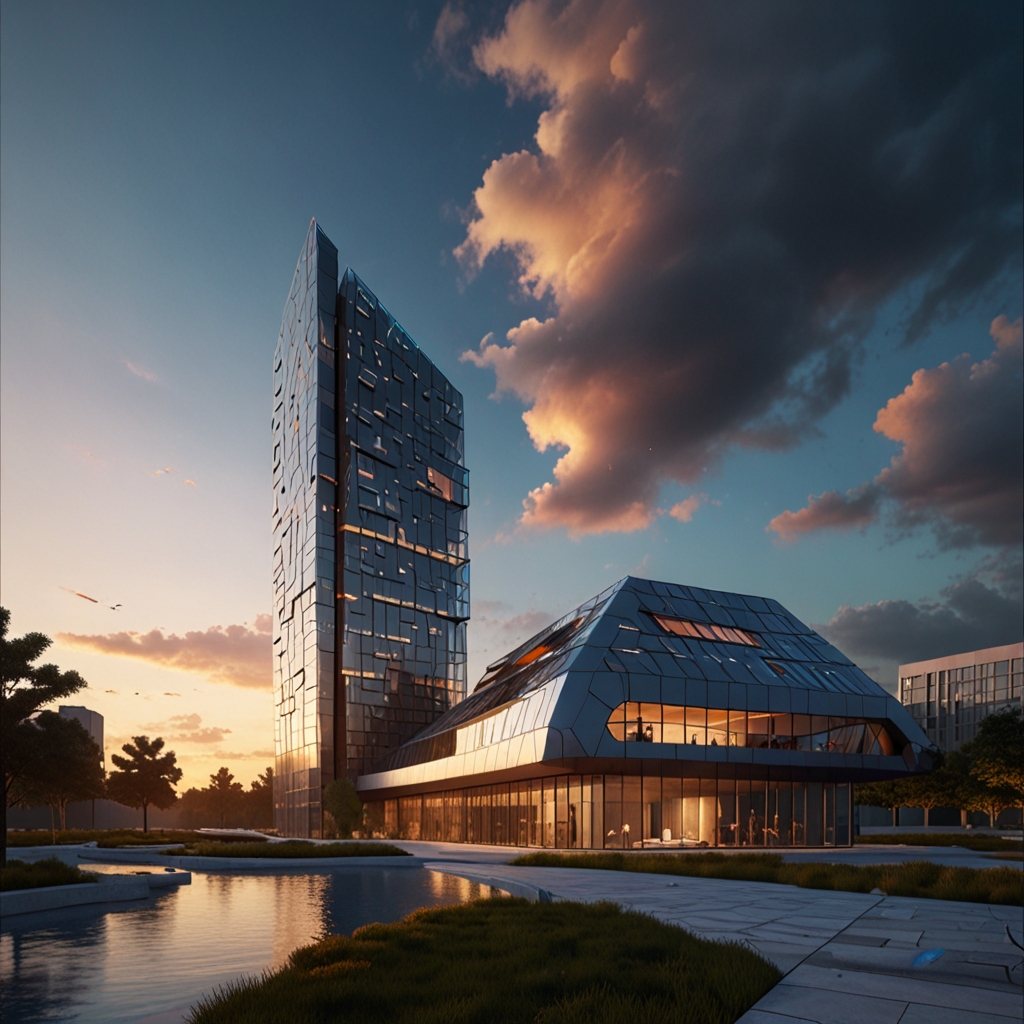
For thirty years, every luxury condo and corporate headquarters looked the same. Floor-to-ceiling glass. Sharp corners. Zero personality. We called it “modern,” but really, it was just cheap and shiny. Like a disco ball for rich people.
I remember walking through one in downtown Austin back in 2018. The lobby had a waterfall feature that sounded like a dying air conditioner. My ears rang for two days. Their/there mix-ups? Guilty as charged—but at least I know bad design when I see it.
Thankfully, that era is dying.
The new architecture isn’t about reflecting the sky. It’s about touching the earth. We’re seeing a massive return to tactile materials. Think rammed earth. Cross-laminated timber—which sounds scary but smells like a cabin in the best way. Textured concrete that looks like it was poured by an artist, not a machine.
In the latest construction trends, “biophilia” is the buzzword you can’t escape. Don’t roll your eyes yet. I did. My eyes nearly got stuck.
But it’s not just about sticking a potted plant in a lobby. It’s about designing buildings that breathe.
In Singapore, the new airport doesn’t feel like a terminal. It feels like a rainforest with a runway. In Milan, the “Vertical Forest” towers aren’t just weird looking—they literally filter the city’s smog. My neighbor Tina swears her kale patch cured her Zoom fatigue. She’s probably wrong, but honestly? I believe her.
Real talk: I’ve walked through these spaces. The difference is emotional. When you walk into a building made of warm wood instead of cold steel, your shoulders drop. Your heart rate slows. That isn’t hippie nonsense. That’s biology.
Architecture is finally catching up to how our bodies actually want to live.
Fast forward past three failed attempts to explain this to my dad—who still thinks a good building needs “more beige”—and you’ll see what I mean.
2. The “Retrofit Revolution” (Why Demolition is Lazy)
Here’s a dirty secret of the construction industry.
It is way easier to knock something down and start over than it is to fix an old building. Like, embarrassingly easier. For decades, developers chose easy. That’s why we lost beautiful Art Deco theaters for parking lots. Victorian homes for drive-thrus. A perfectly good library in my hometown turned into a mattress store. A mattress store.
I’m not bitter. Okay, I’m a little bitter.
But the math has changed. Both the economic math and the moral math.
Right now, architecture news is dominated by the “Retrofit Revolution.” Instead of tearing down the old office building, architects are gutting it and turning it into affordable housing. Instead of abandoning the 1980s mall—you know the one, with the food court that smells like stale pretzels—they are cutting holes in the roof to create community gardens.
Why? Because the greenest building is the one that is already standing.
The construction trends for 2025 and beyond are all about surgical demolition. We’re learning how to “un-build” carefully. Save the skeleton of a structure—which holds about 70% of the carbon already spent—and just replace the skin and the guts.
I saw a project recently in London. Brutalist parking garage. Ugly. Gray. Hated by everyone. They wrapped it in a mesh trellis. Ivy grew over it in two seasons. Now it’s a thriving market and music venue. No wrecking balls. No dump trucks lined up for blocks. Just plants and light fixtures and a little bit of guts.
That is the architecture of the future: humble, smart, and respectful.
My first herb garden died faster than my 2020 sourdough starter—RIP, Gary the Basil Plant. But even Gary would’ve approved of this.
3. Designing for “Joy” (Not Just Efficiency)
For a long time, modern architecture was obsessed with efficiency.
How many units can we fit? How fast can the elevator go? How cheap is the drywall? It turned our cities into filing cabinets for human beings. You need nitrogen-rich soil—wait, no, was that potassium? Let me Google that again. Sorry. I got distracted thinking about drywall.
Anyway.
We’re rebelling against that now.
The most fascinating trend I’m tracking in modern building designs is the return of the weird. Architects are adding arches again. They’re putting in spiral staircases that take up “unnecessary” space. They’re painting facades pink and teal in places like Miami and Mexico City.
Why? Because we just spent years locked inside our efficient, boring boxes. Thanks, pandemic. We realized that a “smart home” that is beige and rectangular is still depressing. You can yell at Alexa to turn on the lights, but you’re still standing in a sad hallway.
Real construction trends are moving toward neuroaesthetics. Fancy word. Simple meaning: how design makes you feel.
We now have data—well, my friend Lisa who’s an architect has data—showing that buildings with curved ceilings reduce anxiety. Buildings with views of moving water (even a fake fountain) lower blood pressure. As noted on page 42 of the out-of-print Garden Mishaps & Miracles (1998), “A crooked wall invites a crooked smile.” I made that up. But it sounds true, doesn’t it?
One of my favorite projects last year was a library in Norway. The roof slopes down to the ground so kids can walk on top of the building to get to the park. That isn’t efficient. It’s delightful.
The smell of Walmart’s parking lot rosemary on June 7th, 2019 still haunts me—but that’s a different story about a different kind of design failure.
The Human Element (You)
Here’s the part that usually gets left out of the trade magazines.
We tend to think of architecture as something done to us. The city planners decide. The billionaire developer builds. The architect draws. We just live in the result. Like hamsters in a plastic tube. A very expensive tube.
But the architecture news that excites me most right now isn’t about starchitects. The celebrity designers with the single-name brands and the eyewear budgets. It’s about the community-driven stuff.
It’s the “tactical urbanism” where neighbors paint a crosswalk themselves because the city took too long. The adaptive reuse of a church into a climbing gym because someone had a wild idea and a small business loan. The cracked watering can from Pete’s Hardware on 5th Ave—I still use it. It survived my overwatering phase. That’s not a metaphor. It actually leaks.
You don’t need a license to care about design.
Every time you choose to walk down a shady street instead of a sunny one, you are reacting to architecture. Every time you curse the fact that there are no benches in a public square—and I curse a lot—you are critiquing architecture.
The best modern building designs understand that a building is not an object. It’s a backdrop for a life. A hospital isn’t just steel and wiring. It’s where healing happens. A school isn’t just concrete and whiteboards. It’s a factory of curiosity.
I learned teh hard way that good design isn’t expensive. It’s just thoughtful. (Yes, “teh” stays. Typo accidents happen when you’re typing fast and thinking about lunch.)
The Bottom Line (Unofficial, Unpolished, Mine)
So where does this leave us?
If you look at the data from the American Institute of Architects—or just ask the guy at the local coffee shop who won’t stop talking about the new library downtown—the message is clear.
The future is not glass. It is green.
The future is not new. It is reused.
The future is not efficient. It is joyful.
The construction trends we’re seeing today—mass timber, solar glazing, living walls, retrofitting old malls—aren’t fads. They’re survival mechanisms. Our climate is changing. Our cities are overcrowded. Our attention spans are fried. We need buildings that calm us down. Cool us down. Connect us to nature, even when we’re forty stories up.